![]() |
| 退休MIT研究科學家潘志生博士發起悼念中英聯合聲明成廢紙。 (周菊子攝) |
| 潘志生與友人在波士頓司徒麗英公園撐起黃雨傘,開悼念會。 (周菊子攝) |
| 支持活動者蒙面出席。(周菊子攝) |
| 活動現場懸掛美國,中華民國國旗。(周菊子攝) |
| 謝中之整理萱掛的旗幟。(周菊子攝) |
| 高秉浩醫師堅持不懈,要為香港發聲。(周菊子攝) |
人生一定要有的八個朋友: 推手(Builder)、 支柱(Champion)、 同好(Collaborator)、 夥伴(Companion)、 中介(Connector)、 開心果(Energizer)、 開路者(Mind Opener)、 導師(Navigator)。 chutze@bostonorange.com ******************* All rights of articles and photos on this website are reserved.
![]() |
| 退休MIT研究科學家潘志生博士發起悼念中英聯合聲明成廢紙。 (周菊子攝) |
| 潘志生與友人在波士頓司徒麗英公園撐起黃雨傘,開悼念會。 (周菊子攝) |
| 支持活動者蒙面出席。(周菊子攝) |
| 活動現場懸掛美國,中華民國國旗。(周菊子攝) |
| 謝中之整理萱掛的旗幟。(周菊子攝) |
| 高秉浩醫師堅持不懈,要為香港發聲。(周菊子攝) |
![]() |
| 何遠光(右起)、雷國輝、余麗媖依序代表華埠主街, 中華公所,華商會,攜手為促進華埠商機努力。(黃周麗桃提供) |
繼6月21日由胡衛正率領的胡清白鶴派,派出一大一小兩頭瑞獅在華埠牌樓前吸引人潮之後,6月28日中午,由華林派的Bob Rosen和余翠梅 (Mai Du)率徒子徒孫,在鑼鼓敲擊聲中,舞動3頭瑞獅。
![]() |
| 華埠主街的活動,中華公所也是贊助單位之一。(黃周麗桃提供) |
華埠主街為今年排定的醒獅賀福表演,共請來5隊醒獅團,在胡清白鶴派,華林派之外,還有華美舞獅隊(亞美文化中心),Chiu Mo Koon,以及廣教學校。
7月5日這週末,將是華埠主街夏日節,有更豐富的活動安排。9月13日則已排定為華埠主街舉辦的中秋燈籠節。
![]() |
| 華埠主街訂7月5日舉辦夏日節。(何遠光提供) |
在6月至9月底之間每週四下午4到6點,綠路保護會在又稱為「陳毓禮、黃杏蓉公園」的華埠公園內推出「綠路遊樂」系列。
每週六中午,由華埠主街安排舞獅表演。
亞美社區發展協會青年小組的A-VOYCE,排定每月最後一個週六的下午1點至3點,也就是7月26日,9月27日,10月25日,舉辦「歡樂星期六」活動。
波士頓華商會已從6月15日起,29日,7月14日,27日,8月24日每週日的早上9點半至中午12點,安排青年舞蹈和太極班。下午2點至4點,安排音樂表演。
華埠主街夏日聯歡會由華埠主街在7月5日的上午9點到下午6
點舉辦,綠路保護會印製的華埠牌樓夏日活動表。
(周菊子攝)
在週末期間假華埠牌樓舉辦的活動,還包括7月12日起每週六的早上9點半至下午1
點的農夫市場,8月10日的中華公所中秋節聯歡會,8月22日至24日的亞美社區發展協會「華埠牌樓電影節」。9月13日有華埠主街的中秋燈籠節,9月19日下午2到5點,中華耆英會的「雙重慶祝重陽節」,以及9月27日上午11點至下午3點,包氏文藝中心的體驗華埠藝術節等。(華埠主街澄清:主辦單位為主街,中華公所和綠路保護會。)![]() |
| 胡清白鶴派6月21日表演舞獅。(何遠光提供) |
(Boston Orange編譯) 麻州政府6月30日公佈2026-2030會計年度的基礎建設及維修計畫 (CPI),將在這5年內斥資166億美元,提升麻州內的房屋可負擔性,推動經濟發展,改善交通及公共基礎設施。
在2026會計年度中的基礎設施及維修預算超過32億美元,比2025會計年度的預算多1億1000萬元,新的重點放在生產並降低樓宇開銷,實施本屆政府的標竿經濟發展法案,「麻州領先法 (Mass Lead Act)」。
根據這預算計畫,關於住房可負擔性,未來5年,麻州政府計畫在房屋項目上投資23.4億美元,在基礎建設及維修計畫投資總額中,佔比從之前的9%,增加到14%。
麻州政府這部分的新預算,計劃通過支持超過 70 個社區撥款項目(每年總計 7.5 億美元),加強與市鎮的合作,確保所有社區的健康和活力。
其他的基礎建設及維修計畫預算包括:
Governor Healey and Lieutenant Governor Driscoll Release $16.6 Billion Capital Investment Plan for Fiscal Years 2026–2030
Five-Year Plan Funds Housing Production, Supports Municipal Infrastructure, Increases Economic Competitiveness
BOSTON – The Healey-Driscoll Administration today released its Capital Investment Plan (CIP) for Fiscal Years 2026–2030, investing $16.6 billion in state resources over five years to increase housing affordability, fund economic development programs, and improve transportation and public infrastructure across the state.
The CIP includes over $3.2 billion in spending during Fiscal Year 2026 (FY26), a $110 million increase over FY25, with new growth focused on production and lowering the cost of housing and implementing the Administration's landmark economic development legislation, the Mass Leads Act, to drive innovation, create jobs, and support rural and regional development initiatives.
“Our capital plan focuses on smart, fiscally responsible investments to make Massachusetts more affordable, more competitive, and create more jobs,” said Governor Maura Healey. “These investments will help us build more housing to lower costs, fix our roads and bridges, and grow our lead in cutting edge industries like applied AI. Since taking office, our capital investment strategy has been to put every dollar toward making our state more affordable, equitable and competitive for everyone who lives and works here, and the targeted investments in this year’s plan build on our success and will have a real impact for our people.”
“Over the last two fiscal years, our administration’s capital funding has enabled transformative projects and programs that equip municipalities to thrive in every region of Massachusetts,” said Lieutenant Governor Kim Driscoll. “With support for over 70 community grant programs, totaling $750 million each year, and critical funds to improve municipal infrastructure, the FY26-FY30 CIP reinforces our ongoing commitment to partnering with cities and towns to ensure healthy and vibrant communities for residents.”
Since taking office, the Healey-Driscoll Administration has increased capital funding for housing by 71 percent and created new programs including HousingWorks, the largest and most flexible capital source for public infrastructure projects that support and accelerate housing production, spur private development, and create jobs. The CIP further advances the Administration’s housing efforts with a $2.34 billion investment over five years, growing the overall portion of the CIP dedicated to housing from nine percent when the Healey-Driscoll administration took office to 14 percent today. The Administration’s FY26 CIP funding will drive down the cost of housing in Massachusetts by supporting the creation of over 6,000 new units.
In this capital plan the Administration continues making long-overdue investments in Massachusetts's transportation infrastructure, ensuring that residents in every region of the state have access to safe and efficient transit. The CIP provides funding to repair and replace critical infrastructure, improve public transit safety and reliability, and equip municipalities to meet local transportation needs. Over FY26-FY30, the state will provide $1 billion in Chapter 90 funds to municipalities to improve local roads and bridges. The CIP furthers the Administration's commitment to replacing the Cape Cod bridges, with $104.6 million in FY26 ($527.6 million in FY26-FY30). Specifically, in FY26 and FY27, MassDOT plans to conduct the design, permitting, right-of-way, and utility relocation processes for the Sagamore Bridge and to advance the design process for the Bourne Bridge. The capital plan also includes $61.2 million in reliability and modernization-oriented spending for the state-owned rail system, $59.0 million for pavement improvements on the National Highway System, and $52.8 million for regional transit authorities (RTAs) and local transportation providers. To improve connectivity, the Administration is also investing $31.5 million over FY26-FY30 in West-East Rail, and approximately $1.14 billion in the MBTA, which includes funding to improve station accessibility and support procurement of new Red Line, Orange Line, and commuter rail vehicles.
The capital plan fosters opportunity and helps to sustain Massachusetts’s high-growth economy with $1.5 billion in funding for the Executive Office of Economic Development (EOED) over five years. The FY26–FY30 CIP provides $251 million to support implementation of the Mass Leads Act and expand initiatives that reinforce Massachusetts’s leadership in innovation. Included in these funds is $57.5 million for the Massachusetts Clean Energy Center (MassCEC)—promoting job creation and workforce development through deployment of climate technologies—and $28 million for the Mass Impact program, which invests in large-scale infrastructure improvements and initiatives that revitalize underserved communities. The FY26-FY30 CIP also unlocks new development in communities across the state through $657 million to support development and infrastructure improvements in municipalities.
The Administration is continuing to prepare Massachusetts for increasing extreme weather challenges. The FY26–FY30 CIP leverages federal partnerships via the Clean Water Trust to invest $671.5 million in clean water and clean drinking water. It also includes $129.5 million to Municipal Vulnerability Preparedness (MVP) program to prepare and towns for floods, extreme heat, and coastal erosion with grants for community-led infrastructure projects.
The CIP also provides resources to maintain, modernize, and decarbonize Massachusetts’s capital assets, which include over 1,700 buildings, over 4,000 bridges and tunnels, and 450,000 acres of public space. It includes more than a $1.0 billion to address deferred maintenance that will extend asset life, minimize future costs, and maximize building efficiency so that government can better meet the needs of Massachusetts’ residents.
The plan also continues to advance key projects, including new Veterans Homes in Chelsea and Holyoke, major court projects in Springfield, Framingham, Quincy and Lynn, and the rehabilitation of MCI-Framingham, the nation’s oldest operating women’s correctional facility.
“This capital plan is responsible and sustainable while still making major investments in the state’s people, our economy, and our future,” said Administration and Finance Secretary Matthew J. Gorzkowicz. “There is a great need for capital resources across Massachusetts, and our FY26-FY30 CIP carefully balances the state’s financial constraints with strategic spending on projects and programs that make a real difference for communities.”
“The Healey-Driscoll Administration’s five-year Capital Investment Plan is a roadmap to a stronger and more resilient Commonwealth,” said Transportation Secretary and CEO Monica Tibbits-Nutt. “With $16.6 billion in strategic investments, we are laying the foundation for generational change—advancing affordable housing, modernizing our infrastructure, creating meaningful jobs, and fueling inclusive economic growth. Every corner of Massachusetts—rural, urban, and everywhere in between—will feel the impact of this transformative plan. No one is left behind, and every dollar moves us toward a more equitable future.”
To view the full FY26-FY30 CIP, click the link here.
Notable investments in the FY26–FY30 CIP include:
FY26 – FY30 Housing Production and Preservation
$622 million to support the suite of HousingWorks programs that offer flexible tools to support affordable housing development, preservation, and rehabilitation
$334 million to support the Affordable Housing Trust Fund (AHTF) to accelerate development of affordable units for households whose incomes are not more than 110% AMI, with most projects supporting households at or below 60% AMI
$657 million to fund Public Housing investments that address critical repairs across the public housing portfolio through a combination of formula funding to local housing authorities (LHAs), targeted awards that address specific components, and ad hoc emergency repairs to mitigate health and safety issues $115 million to support the Public Housing Sustainability and Resiliency program, which funds projects that reduce greenhouse gas emissions produced by the public housing portfolio, increase the portfolio’s resilience to the effects of climate change, and improve the indoor air quality within the buildings
$15 million in Public Housing Accessibility to create or retrofit 12 public housing units into accessible units per year. Prioritizing accessible housing is extremely important since two-thirds of the portfolio houses lower-income older adults
$50 million for the Momentum Fund, a pioneering initiative designed to leverage state resources to support large scale, mixed-income multifamily development in a time where rising construction costs and high interest rates challenge the financial viability of these critical projects
$90 million to support several capital programs formerly supported by federal relief funds, including the Middle Income Housing Fund which supports the development of rental and for-sale housing through new construction, rehabilitation, and adaptive reuse, the CommonWealth Builder Fund that aims to address the racial homeownership gap in Massachusetts, and the ONE+ Mortgage and MassDREAMS programs geared towards improving home ownership opportunities throughout the Commonwealth
FY26- FY30 Advancing the Commonwealth’s Economic Development Agenda
$69 million for the new Massachusetts AI Hub to strengthen the state’s AI ecosystem
$57 million to support the Climatetech Program designed to promote job creation, economic development, and workforce development through deployment of climate technologies in the Massachusetts
$34 million for the Massachusetts TechHub Program to support the advancement of emerging technology sectors in regions across the Commonwealth
$33 million for the Business Builds Program to support businesses in making sustainable investments
$32 million for EOED’s Robotics grant program which is designed to increase access to robotics tools for communities across Massachusetts
$75 million for Workforce Skills Capital grants to expand career technical education programs, upgrade school and instructional lab spaces, and increase capacity in workforce training programs
$57 million for the Early Education and Out of School Time grants to improve child care facilities and add seats and classrooms
FY26-FY30 Investing in Sustainable Infrastructure, Protecting Land and Ensuring Clean Water
$672 million for the Clean Water Trust, via a combination of state funding and federal partnerships, to update and enhance water infrastructure
$182 million to the Department of Conservation and Recreation (DCR) to ensure parks, paths, and recreational locations are accessible to all residents
$225 million for land preservation, protection of nature and wildlife, and tree planting.
$158 million to replace, upgrade, and electrify Commonwealth vehicles.
$129.5 million in Municipal Vulnerability Preparedness (MVP) funding to help municipalities strengthen, restore, and protect local infrastructure
$120 million for inter-agency Resilient Mass actions to adapt to future climate conditions and reduce the risks associate with flooding, heat, and sea level rise
$113 million for decarbonization efforts at State Universities and Community Colleges
$62 million in grants to municipalities for inland dam and seawall projects to improve safety and prevent waterway or precipitation-based flooding
FY26–FY30 Improving Services and Efficiency
$711 million for IT initiatives that will improve healthcare systems, including $347 million for the Health Insurance Exchange (HIX) Integrated Eligibility System
$101 million to strengthen cybersecurity and IT infrastructure to help maintain a secure IT environment for daily operations across the Commonwealth
$82 million to continue supporting the Commonwealth’s Digital Roadmap initiative to scale and expand digital tools and services across agencies, with a focus on delivering accessible, user-friendly, and secure digital experiences for residents
$76 million to support Electronic Health Records (EHR) Modernization to consolidate EHRs for inpatient services delivered by the Department of Public Health and the Department of Mental Health
$30 million for IT investments in education, including $7 million to continue development of a new family portal and case management system for the state’s child care financial assistance programs
FY26–FY30 Protecting and Preserving Our Assets
$1 billion for Chapter 90 municipal capital grants, along with an additional $25 million for the Rural Roadway Funding program
$488 million for the Sagamore Bridge Replacement Project over five years
$466 million to support the modernization of the state’s courts
$497 million for the renovation of the Department of Public Health’s Lemuel Shattuck Hospital
$275 million for DCR facility improvements and equipment, including repairs and maintenance for rinks, pools, parks, campgrounds and boat ramps
$91 million for new Veterans Homes in Chelsea and Holyoke
$61 million in reliability and modernization-oriented spending for the state-owned rail system
$53 million for regional transit authority (RTA) and local transportation provider vehicle and facility investments
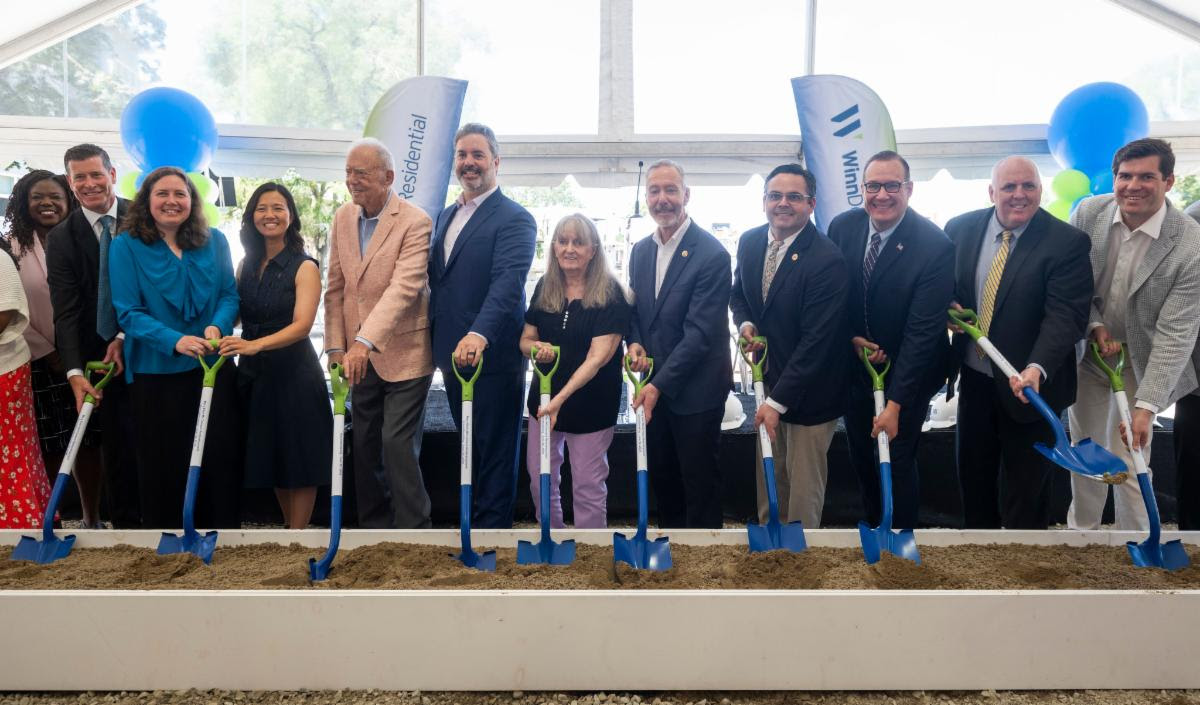
| Mary Ellen McCormack第一期A樓破土動工。(周菊子攝) |
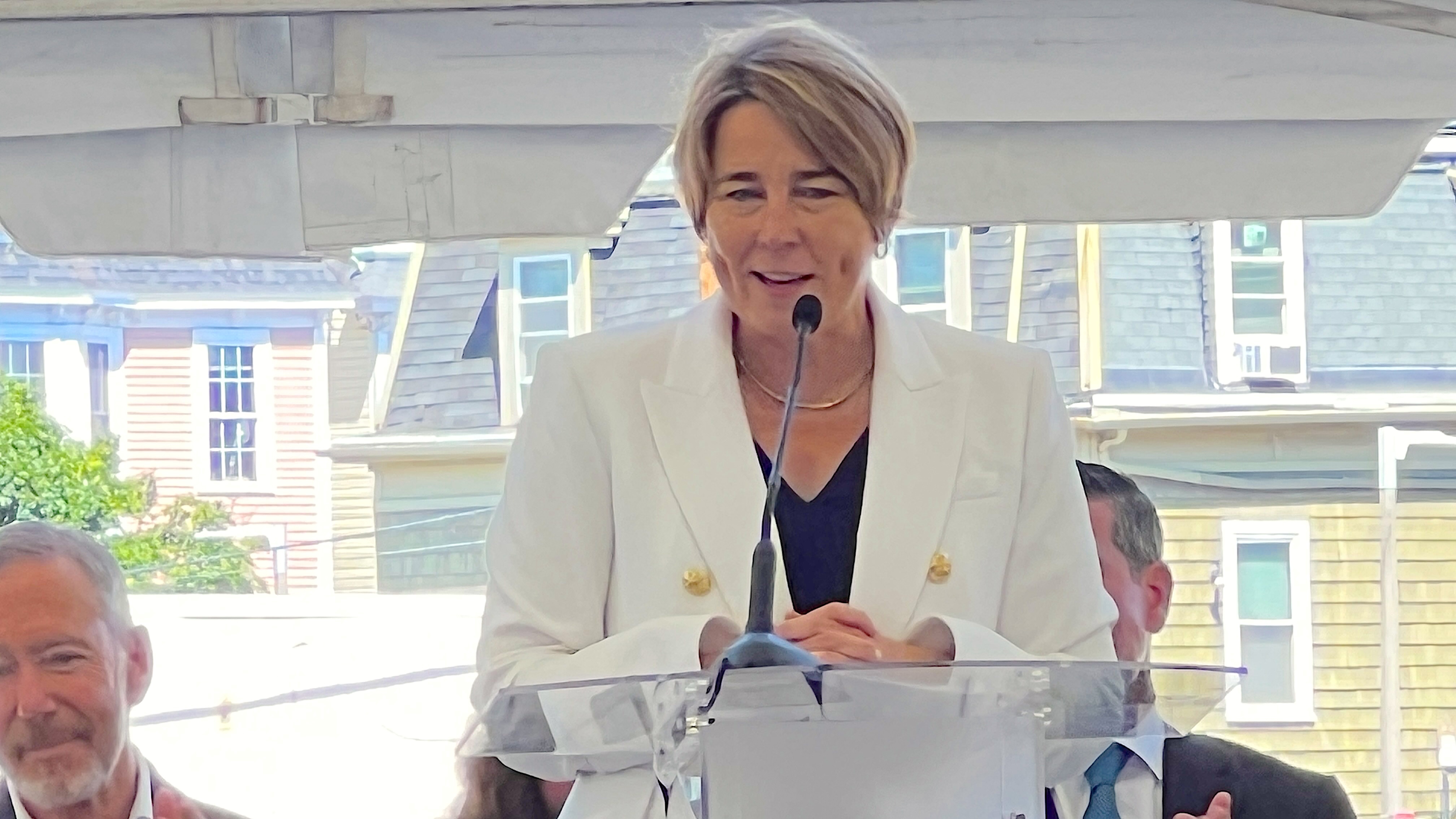
| 麻州州長Maura Healey強調州政府加倍努力支持建造房屋。(周菊子攝) |
| 麻州州長Maura Healey。(周菊子攝) |
整個第一期工程,包括預定2027年初開工,將建造492個住宅單位的B、C樓工程,將共建成1,310戶這宅單位,其中529戶將為替換原有的公屋單位,781戶是新建的中等收入及市場價單位,包括236戶深度可負擔單元,以及專為老年人設計的C1樓。
| 波士頓市長吳弭(左起),麻州州長長Maura Healey, Winn Development 開發副總裁Andrew Colbert。(周菊子攝) |
| 波士頓房屋局局長Kenzie Bok這天感慨發言,還獲得生日祝福。(周菊子攝) |
麻州州長奚莉強調,州政府正在加倍努力,提供助力,希望每一個人都能擁有自己的家。
波士頓市長吳弭藉「舊港」是波士頓市第一棟公屋,也是全美最早擁有熱水和洗衣設施,致力保障家庭尊嚴的住房社區之一做引言,指波士頓市有許多個全美第一,從來都引領風潮,不必他人指點的城市。她強調,每建造一棟建築,每增加一個單元,都是在為另一個家庭、另一代人投資。
波士頓房屋局(BHA)行政主管 白凱欣(Kenzie Bok)在致詞中透露,當年她從哈佛大學畢業後,曾在BHA任職,那時就接觸過「舊港」這棟公屋事務,如今能參與推動翻修擴建,落實居民願景,很感欣慰,讚揚參與,促成這計劃的許多人。
Mary Ellen McCormack公屋社區,是麻州近期規模最大的公屋工程,估計將耗資20億元,建3316戶住宅,持續20年才能完工。第一期工程總投資額為11億元,已獲得波士頓計劃局批准的施工計劃,成本約7.76億元,A樓的建築成本為6200萬美元,其中包括800萬元將用於改善公共基礎設施,200萬元用於防洪減災。施工計劃的資金,共有至少9種來源,包括私人股本,聯邦低收入住房稅收抵免,聯邦能源稅收抵免,麻州房屋局提供第一抵押貸款,波士頓房屋局提供開發債券融資,BlueHub 資本提供貸款,AFL-CIO提供資金,麻州住房和移居社區廳透過LIHTC和住房穩定基金提供資源。
MAYOR MICHELLE WU JOINS FEDERAL AND STATE LEADERS TO CELEBRATE THE START OF CONSTRUCTION OF THE REDEVELOPMENT OF MARY ELLEN MCCORMACK PUBLIC HOUSING Resident-led Task Force Gains Ownership Stake in Boston’s Oldest Public Housing Community |
|
BOSTON - Tuesday, July 1, 2025 - Mayor Michelle Wu yesterday joined federal and state colleagues and residents of the Mary Ellen McCormack public housing community to celebrate the start of a long-awaited effort to redevelop Boston’s oldest public housing community, breaking ground on the first phase of construction for a new 3,300-unit mixed-income community in South Boston. Boston Mayor Michelle Wu, Massachusetts Governor Maura Healey, and Congressman Stephen Lynch joined residents and partners near the newly poured footings and foundations for the first apartment building of the project, known as Building A. The 112,000-square-foot structure will provide 94 modern apartments for low-income families currently living at the Mary Ellen McCormack community when it is ready for occupancy in the fall of 2026. “Mary Ellen McCormack has long been a cornerstone of the South Boston community, anchoring generations of families and helping define what public housing means in our City and country,” said Mayor Michelle Wu. “Not only are we celebrating the start of this project, but a historic and sustainable transformation led by and for the residents themselves. This project ensures that the residents who have built this incredible community will continue to shape its future for decades to come.” The groundbreaking marks a milestone for residents as it triggered provisions for the Mary Ellen McCormack Task Force to gain an ownership stake in all 1,016 affordable housing apartments planned for the 30-acre site. The project also features the first-ever underground geothermal heating and cooling system installed in partnership by WinnCompanies and the Boston Housing Authority. “This is a proud moment for our partnership with Winn, the Boston Housing Authority and our elected representatives. The Task Force and the residents of this community have been preparing for this day for a long, long time. We have shaped every aspect of this first project from the playground equipment in Veterans Park to the layout of the apartments and the interior finishes. We cannot wait to see the smiles on residents’ faces when they move into their new, affordable homes,” said Carol Sullivan, executive director of the Mary Ellen McCormack Task Force. The redevelopment will replace all 1016 public housing units on site, and all current residents in good standing have a right to return to new apartments. Existing buildings will be demolished in phases as part of a complex relocation strategy operationalized to maximize existing households moving directly into new apartments. The tenant-paid portion of the rent will not change. WinnCompanies will pay for basic utilities for affordable households. The BHA will retain ownership of the land to preserve permanent affordability for low-income families while management, ownership and maintenance of the buildings will be provided by WinnCompanies. "The Mary Ellen McCormack Complex redevelopment is a great example of the impact our Affordable Homes Act is having to jumpstart construction of housing, rehabilitate public housing, and lower costs across the state,” said Massachusetts Governor Maura Healey. "Thanks to the leadership of WinnCompanies, thousands of Boston residents will soon have reasonably priced, modern homes in a vibrant community." “I am genuinely excited that we are at last breaking ground on the long-awaited redevelopment of Mary Ellen McCormack (MEM) Housing Complex,” said Congressman Stephen F. Lynch. “The vision for the redevelopment started decades ago at a meeting with U.S. Rep. Joe Moakley, Councilor Jim Kelly, Mayor Tom Menino, Rep. Jack Hart, Councilor Michael Flaherty, Boston Housing Authority Director Sandra Henriquez, and members of the MEM Tenant Task Force. That was a long time ago. When fully completed, this project will not only provide new and much-needed housing to residents of one of the oldest public housing developments in the United States, but it will also double the number of units on site, provide senior housing, and allow the MEM Task Force to gain an ownership stake in the new apartments. It will also include a new YMCA Community Center on the property, for which I helped secure $850,000 in Congressional Community Project Funding, named in honor of our friend, former BHA Administrator Bill McGonagle. I would like to thank Gilbert Winn and his colleagues at WinnCompanies for their leadership throughout this process, as well as my colleagues in Government - Governor Maura Healey, Secretary of Housing and Livable Communities Ed Augustus, Mayor Michelle Wu, BHA Administrator Kenzie Bok, State Senator Nick Collins, State Representative David Biele, City Councilor Ed Flynn, and City Councilor Erin Murphy.” In addition to the $62 million apartment building, construction of Building A features $8 million in public infrastructure improvements designed to strengthen climate resiliency and connect the community to the surrounding South Boston community. It will include a new Veterans Park with an accessible tot lot and splash pad, two-way, separated bike lane, reconfigured public streets and associated intersections with pedestrian enhancements, new street trees, planting areas and pedestrian zones. The construction of Building A will be performed under a Project Labor Agreement with significant goals for participation from local residents, low-income residents (known as Section 3 labor), and Minority and Women-Owned Business Enterprises (MWBEs). Targets are set to direct 40 percent of construction work hours to people of color, 25 percent of work hours for Section 3 laborers and 12 percent of hours for women. Additionally, there are goals for Minority Business Enterprises to receive at least 25 percent construction contract value and Women Business Enterprises at least 15 percent. The project has a goal to direct 51 percent of construction work hours to City of Boston residents. “For 90 years, the Boston Housing Authority has worked to create and provide quality affordable housing to Boston families. That work began right here at Mary-Ellen McCormack,” said BHA Administrator Kenzie Bok. “It is impossible to overstate how the legacy of this community, once called the Old Harbor Housing Project, has shaped the BHA, the South Boston neighborhood, the City of Boston and the thousands of families who have called this community home across generations. I’m excited to not only see that legacy secured through mixed-income redevelopment, but to know that Boston’s oldest public housing community will now be one of its greenest, safest, and most modern. Our residents deserve no less.” Built during the Great Depression and opened in 1938, the Mary Ellen McCormack is Boston’s first public housing development and one of the oldest in the United States, consisting of 1,016 deeply subsidized apartments across 35 buildings. Building A will feature 37 one-bedroom units, 44 two-bedroom units, 12 three-bedroom units and one four-bedroom unit. It is being built about 600 feet from the Andrew Square MBTA Red Line subway station, using an efficient U-shaped design with heights that step down from six to four stories. “This is an ambitious and inspired undertaking that has been discussed in Boston for decades. Now, after eight years of intensive planning and permitting, we are starting work on creating a Community of Opportunity that will serve as a national model for fostering long-term economic social and environmental success,” said WinnCompanies CEO Gilbert Winn. “Working households across the income spectrum will reap the benefits as we transform this 30-acre site, standing alongside our federal, state and city supporters, our nonprofit allies, and our partners at the Boston Housing Authority and the tenant-led Task Force.” The project meets the Massachusetts’ Specialized Energy Code as a future Passive House community. Its all-electric design includes a highly efficient geothermal heating and cooling system, consisting of several 800’ deep wells installed underground during the last few months. The building meets rigorous energy targets set by the Passive House Institute US, demonstrating 50 percent savings compared to an ASHRAE 90.1-2019 baseline building. "Rebuilding New England’s oldest public housing development ensures that our commitment to affordable housing in South Boston will endure for generations,” said Senator Nick Collins. “I am proud to have collaborated with my colleagues in supporting the Boston Housing Authority and WinnCompanies to turn this vision into reality." “After years of careful planning and engagement, this transformative project represents a substantial investment in affordable housing and workforce housing,” said Representative David Biele. "I have been proud to support this project with my colleagues in government in partnership with the residents of the Mary Ellen McCormack and its Task Force to make this groundbreaking a reality.” “Today, we celebrate years of tireless dedication from the Mary Ellen McCormack Task Force, neighborhood advocates, and community leaders resulting in the long-awaited groundbreaking of 1,016 new affordable housing units,” said City Councilor Ed Flynn. “The much-needed redevelopment is critical to providing stable homes and improving the quality of life for all neighbors in public housing - including our seniors, persons with disabilities, veterans and young families - for generations to come. With infrastructure upgrades like the Bill McGonagle Community Center and a new Veterans Park, this new Mary Ellen McCormack community will be accessible to all of South Boston. I couldn't be more excited to see it through to completion in 2026.” Once Building A is completed, financing will be secured for, and construction will begin on Building B, which will offer 300 mixed-income apartments, and Building C, which will offer 196 mixed-income apartments, with 172 units reserved for seniors who are 62 or older with on-site resident services and programming. “MassHousing is excited to see ground broken for the first phase of the redevelopment of the Mary Ellen McCormack public housing community that is going to replace hundreds of obsolete and distressed units with brand new apartment homes for the residents there,” said MassHousing CEO Chrystal Kornegay. “This redevelopment effort by the BHA and WinnCompanies is not only going to replace the existing housing, but will add more than 2,200 additional new, mixed-income rental homes and revitalize this entire South Boston neighborhood.” The project was made possible thanks to a construction loan from the Bank of America; Federal Low Income Housing Tax Credit and Energy Tax Credit equity from Bank of America, a tax-exempt bridge loan and tax-exempt first mortgage loan from MassHousing; a subordinate loan from the Affordable Housing Trust Fund maintained by the Massachusetts Executive Office of Housing & Livable Communities; a subordinate loan from the BHA; and State Low Income Housing Tax Credit equity from Bank of America with a loan from BlueHub Capital. The Commonwealth and the City of Boston have also committed significant funding toward future buildings and infrastructure in the redevelopment. “At Bank of America, we know there is a direct link between secure, affordable housing and financial security,” said Miceal Chamberlain, President of Massachusetts for Bank of America. “Working together with WinnCompanies and Boston Housing Authority, we are creating the opportunity for many in our community to be set on a path to success.” “The AFL-CIO Housing Investment Trust is proud to invest union pensions in the redevelopment of Mary Ellen McCormack,” said Chang Suh, CEO, AFL-CIO Housing Investment Trust. “We chose to work with WinnCompanies because they work side-by-side with their residents, and because of their commitment to hiring and training the next generation of union tradespeople.” In all, eight new residential buildings will be built over the course of a decade during Phase One of the redevelopment. There will be 1,310 apartments built, replacing 529 aging public housing apartments for BHA households and creating 781 additional apartment homes for middle income and market rate renters. Phase One construction will redevelop the northern 18 acres of the property, increasing open space by 73 percent with new pedestrian walking paths, bike infrastructure and gathering spaces. In addition, 33,000 square feet of ground-floor retail space will be created for local small businesses, including a possible grocery retailer. Twenty-five (25) percent of retail space will be offered at below-market leases. The new community will also include a new Community Center named after former BHA Administrator Bill McGonagle and operated in partnership with the Greater Boston YMCA. |