|
|

|
|


|
|
|
|
|
|
Governor Healey Unveils State House Archival Photography Project
.png)

“The Massachusetts State House has a storied, revolutionary history – from Sam Adams and Paul Revere laying the first cornerstone in 1795, to President John F. Kennedy’s 1961 address ahead of his inauguration, to Martin Luther King Jr.’s 1965 address at the height of the Civil Rights Movement,” said Governor Healey. “I’m thrilled to unveil this photography project, led by some of our most talented young people, which reminds us all of our obligation to honor the legacy of this incredible building while also striving to continue to deliver history-making progress for our residents.”
“The State House has stood on Beacon Hill since 1798. Over the course of hundreds of years, this building has been witness to countless acts of history, and these photos offer only a snapshot into what has happened here,” said Lieutenant Governor Kim Driscoll. “As we enter our third year in office, we hope to continue to use art as a tool that brings us together and as a way to highlight the Massachusetts story.”
.png)
.png)
“The photos in this collection allow visitors to the State House to see another aspect of the building, and to appreciate the history behind the architectural gem that has been the center of civic life in Massachusetts for over two centuries,” said Secretary of the Commonwealth William Galvin.
The three sets of photos feature the door leading to the Executive Suite, the rostrum in the House Chamber, and a display case in Memorial Hall. The archival film photos are credited to the Office of the Secretary of the Commonwealth and are presumed to have been originally taken between the 1920s-1940s. This project was undertaken by the Governor’s Press Office, with modern-day photos credited to Digital Media Specialist Charlotte Hysen and Assistant Photographer Henry Shifrin.
.png)
.png)
Charlotte Hysen is a visual artist from the NYC area. She recently graduated from Northeastern University with a BA in Media Arts and Communication Studies. In 2023, she was a visual media co-op in the Governor‘s Office, and continues working there part-time as a digital media specialist. To see more of her work, visit charlottehysen.com
Henry Shifrin is a 21 year-old photographer from Chestertown MD. After completing his first co-op at the State House Department of Tours, he then transitioned into his second co-op as a photographer inside the Governor’s office where he remains part time as an assistant photographer. He is currently a fourth-year student at Northeastern University studying journalism and political science. He has a particular interest in documentary and event photography. To see more of his work, visit henryshifrin.com.
In State of the Commonwealth Address, Governor Healey Pledges to Fix Transportation, Make Homes More Affordable and Invest in Education
BOSTON – In her State of the Commonwealth Address on Thursday, Governor Maura Healey reflected on her administration’s record of delivering results on affordability and competitiveness and pledged her commitment to fixing transportation, making homes more affordable, investing in education and growing the economy in 2025.
Healey-Driscoll Administration’s Record
In her first year in office, Governor Healey signed the state’s first tax cuts in 20 years, which went into effect last year. In the first year alone, 64,000 seniors got an average of $1,000 back and more than half a million families got $310 per child or dependent adult, which will go up to $440 this year.
When federal pandemic relief for child care was set to expire, Massachusetts became the only state in the nation to fully replace it. As a result, 36,000 children in Massachusetts are getting quality, affordable child care, which helps parents go back to work and support their families.
Governor Healey also signed the state’s largest housing bill in history. The Affordable Homes Act will create tens of thousands of new homes – and new homeowners. Housing production in state programs is already up by 50 percent with 4,000 additional homes and 2,400 first-time homeowners last year alone.
After years of broken promises, Governor Healey has been committed to fixing the T. She hired Phil Eng, who has addressed workforce shortages by hiring 1,500 new workers and removing slow zones across the system for the first time in 20 years. The administration also made regional transit authorities fare-free, and this year, the MBTA will deliver South Coast Rail service to Taunton, Fall River and New Bedford for the first time in nearly 70 years.
The Healey-Driscoll Administration has also seen major success in their efforts to win federal funding for Massachusetts, with $9 billion won over the past two years for roads and bridges, solar power, high-speed internet, and more. Massachusetts used to rank 34th in the nation for federal transportation dollars but has now risen to 7th nationwide since October 2023. Major awards won this year include the largest single-state bridge grant the federal government has ever given for the Cape Cod Bridges and millions to take the next steps forward on West-East Rail.
Governor Healey has also taken steps to address unprecedented levels of demand for Emergency Assistance family shelter due to the federal government’s inaction and a nationwide housing crisis. The administration has prioritized Massachusetts families, strengthened security, lowered costs, and will phase out hotel shelters this year. They’ve also helped more than 6,000 shelter residents get work authorizations and secured thousands of job placements. These efforts have helped more than 4,500 families exit shelter in the past year, and 430 families have successfully exited temporary respite centers (TRCs) since August 1. Governor Healey also reiterated her call for Congress and the new federal administration to pass a border security bill.
Since taking office, the Healey-Driscoll Administration has been committed to putting veterans first. Governor Healey signed the HERO Act, the most far-reaching veteran's legislation in state history. The administration launched a plan to end veteran homelessness once and for all and hit milestones, ahead of schedule, to build world-class facilities at the veterans’ homes in Chelsea and Holyoke.
The Governor also highlighted Massachusetts’ success in winning a fleet of brand-new, F-35 Fighter Jets at Barnes Air Base in Westfield, helping hundreds of commercial drivers keep their licenses and their jobs, and pardoning misdemeanor marijuana convictions.
“When we deliver results, and people are free to chase their dreams, there is no limit to how strong we can be,” said Governor Healey. “It’s why we are ranked #1 for education, #1 for innovation, and #1 for healthcare. We were named the best state for women, best state to have a baby, and best state to raise a family. We are ranked the most environmentally friendly state, and the safest state as well. Our economy has continued to grow and add good jobs. Unemployment is low, and median household income is the highest in the nation. We have an excellent bond rating, and our Rainy-Day Fund is at record levels. And we can say, with pride and confidence: the state of our Commonwealth is strong.”
2025 Priorities
The Massachusetts economy is strong, and Governor Healey pledged that her Fiscal Year 2026 budget proposal will be responsible and prioritize transportation, housing and education while lowering costs for people and growing the economy.
This year, we’ll work together to implement the historic legislation we passed last year. And we’ll stay focused on the things that matter to you. We’ll take new steps forward: to fix transportation, make homes more affordable, invest in education, and grow our economy,” said Governor Healey. “State revenues are growing. But the cost of providing services has gone up; and federal pandemic relief is long gone. So, we will continue to control spending and live within our means just as every family and business is doing. So, I promise: the budget I submit next week will prioritize efficiency, action and impact. We need every dollar to make a difference. I want to make things move and go in our state.
Transportation
Building on the administration’s success over the past two years to get more federal and state funds in place to fix roads and bridges and putting the MBTA back on the right track, Governor Healey outlined an innovative, historic strategy to invest $8 billion into the state’s transportation infrastructure to improve roads, bridges and public transit, while also stabilizing MBTA finances. This strategy, which builds on the recommendations of the Governor’s Transportation Funding Task Force, will be done without raising taxes and represents the largest state transportation investment in 20 years.
“We’ll put the entire system on stable financial footing, something we haven’t had for decades. When we do this, you’ll see the results,” said Governor Healey. “You’ll see bridges fully open again, like the I-391 viaduct in Chicopee. You’ll see smaller, local bridges finally fixed too, like Commercial Street in East Weymouth. You’ll see more funding in your town’s budget to fix roads and sidewalks. Finally, we’re going to close the T’s budget gap so Phil and his team can keep cookin’.”
Housing
From day one, making housing more affordable has been a top priority of the Healey-Driscoll Administration, and Governor Healey committed to pushing ahead with implementing strategies to increase housing across the state to lower costs.
The Affordable Homes Act is turning underused commercial space into homes, increasing the number of people who can become homeowners, allowing in-law apartments and other Accessory Dwelling Units to be built statewide, and creating the first complete inventory of state-owned land that could be used for housing. Additionally, the MBTA Communities Law is being implemented across the state. 116 municipalities have already adopted new zoning to comply with the law with more than 3,000 new housing units already in the pipeline, which will lower housing costs for everyone.
“If we want our kids to stay here, if we want families to put down roots, if we want seniors to be able to live in the towns they love – we need homes,” said Governor Healey. “And we're going to build them.”
Earlier this week, Governor Healey announced that her budget will include an outside section to eliminate renter-paid broker fees. Currently, most renters in the state are required by default to cover the cost of a broker fee when they rent an apartment, which can be equivalent to a full month of rent. Governor Healey’s proposal will require the fee to be paid by whoever hires the broker, which is usually the landlord.
Education
The Healey-Driscoll Administration is committed to excellence for every student in every school, from early education to K-12 to higher education and career and technical education opportunities. In November, voters decided that the MCAS graduation requirement is not the way forward. Governor Healey believes that a high, statewide standard is important so that students, families and employers know what a diploma earned in Massachusetts represents and to prevent negative impacts for the most vulnerable students. That’s why she will convene a Statewide Graduation Requirement Council – including teachers, colleges, employers and students – to develop recommendations for a permanent, high standard.
“We have the best schools in the country. It’s a core value and it’s also our competitive edge,” said Governor Healey. “So I am committed – and we must all be committed – to excellence for every student. We are Number One for education, and we’re going to stay that way.”
Governor Healey also shared that her administration will continue moving forward on programs that make sure students are trained with the skills that are in demand in today’s economy. The administration has expanded the Innovation Career Pathways program to 100 high schools in fields from biotechnology to clean energy and brought Early College programs to 9,000 students statewide so that high school students can take courses and earn free credits at local colleges.
Governor Healey shared the story of Haris Mukanga, who participated in the Computer Science pathway at Burlington High School, where he worked with an industry mentor to build an app for a local sneaker store. Now he’s a freshman at UMass Lowell majoring in software engineering and managing that same store part-time.
With young people across the state struggling with their mental health, the Governor also highlighted her administration’s commitment to increasing access to mental health care, including by continuing to support the 31 Community Behavioral Health Centers that helped more than 30,000 young people in just 18 months. The Governor will also propose additional resources for school-based behavioral health support in her FY2026 budget.
Governor Healey also expressed her support for legislation proposed by Representative Carol Doherty and Senator Jake Oliveira to make classes in American Sign Language eligible for course credit and graduation requirements.
Health Care
Massachusetts is a national leader in health care. To keep moving forward in improving access to high-quality, affordable health care, Governor Healey this year signed a maternal health bill expanding access to midwives, doulas, birthing centers, postpartum and breast cancer screenings. She also signed a bill capping co-pays at $25 for diabetes, asthma and heart disease medications. Additionally, through an expansion of the ConnectorCare program, 60,000 Massachusetts residents got access to more affordable coverage this year. And when Steward Health Care declared bankruptcy, the administration got them out of Massachusetts and helped find new operators for six of the hospitals, saving access to care for hundreds of thousands of people and 13,000 jobs.
In 2025, the Healey-Driscoll Administration will be focused on primary care. America spends much less on primary care than other countries, which results in worse health outcomes and higher costs. The Governor committed to shifting more resources to primary care and supporting workforce development for primary care providers so that patients can get appointments when they need them, and care is more affordable.
“Massachusetts is America’s healthcare leader. First in quality. First in coverage. And #1 for having the healthiest people,” said Governor Healey. “We are #1 because we have the best and hardest-working nurses, doctors and health care professionals in the world. And we lead because we don’t accept the status quo.”
Economic Development
The Healey-Driscoll Administration has been focused making Massachusetts’ economy more competitive and supporting business growth. Governor Healey highlighted Liz and Nate L’Etoile, the founders of Four Star Farms in Northfield, and Chris Sellers, who runs Four Star brewery at the farm. Previously, breweries like Four Star were barred by state law from selling beer at local farmers’ markets, but that will change this Spring because of the Mass Leads Act. In an effort to take further steps like this to make it easier and cheaper to do business in Massachusetts, Governor Healey called for her economic team to review all business and licensing regulations in the first three months of this year.
The Governor’s Mass Leads economic development bill that she signed this year is delivering an infusion of resources to the state’s booming life sciences and climatetech industries, while also staking a claim on Artificial Intelligence. With $100 million for an AI Hub, Massachusetts is poised to support the scientists and startups whose breakthroughs will define this era, including through a new green-powered data center in Holyoke that can power cutting-edge research and business applications across industries.
“From our Main Street mom-and-pops to our global companies, businesses provide jobs and support communities,” said Governor Healey. “We have to support them, in every sector and corner of our state. That’s what we’re doing.”
Clean Energy
Governor Healey also committed to moving forward on energy independence, implementing the new climate law to speed up permitting and build infrastructure more quickly to get energy to homes and businesses.
“This is a big deal! It means cheaper energy, cleaner energy and energy independence,” said Governor Healey. “We are building new homes, labs, data centers and manufacturing plants. We need this power, and we’re going to go get it.”
Massachusetts 250
Governor Healey opened and closed her speech with a nod to Massachusetts’ revolutionary history ahead of the 250th anniversary of our nation’s founding, urging the people of Massachusetts residents to come together, confront our challenges and continue leading the way.
“In a time that is too often defined by our differences, let’s keep our eyes on the things we share in common,” said Governor Healey. “Let’s recognize that our lives and fates are bound together. Let’s work for the common good in our Commonwealth.”
A full version of Governor Healey’s remarks can be found here and the full video can be found here.
CITY OF BOSTON AWARDED A GRANT FROM THE ENVIRONMENTAL PROTECTION AGENCY FOR $35 MILLION FOR 125 NEW ELECTRIC SCHOOL BUSES |
|
Federal funding will help Boston Public Schools accelerate progress toward a fully electric bus fleet by 2030 |
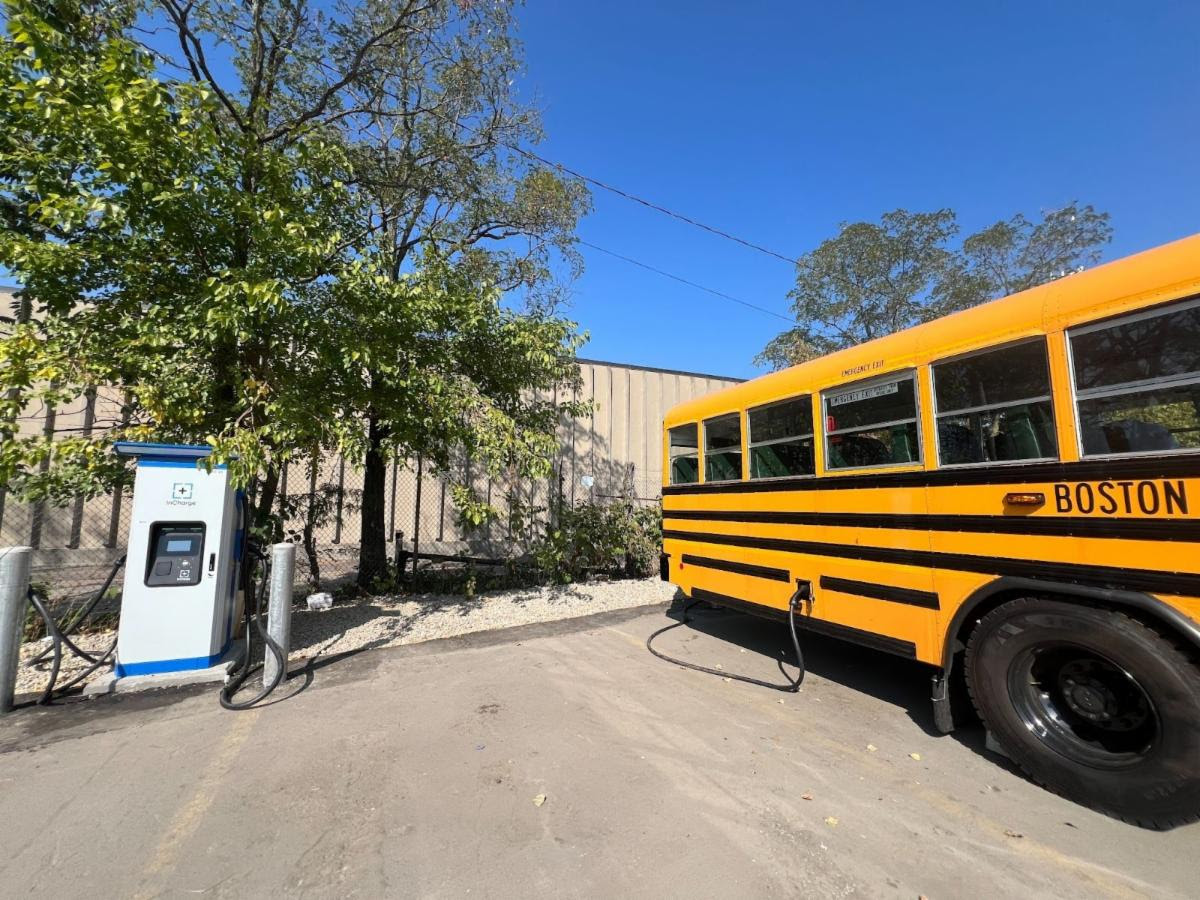
BOSTON – Thursday, January 16, 2025 – The City of Boston today announced that the U.S. Environmental Protection Agency (EPA) has awarded Boston Public Schools (BPS) a $35 million grant to purchase 125, 30-passenger electric school buses. This expansion will allow BPS to accelerate the upgrade of its school bus fleet, which is on track to be fully electric by 2030. The district currently has 40 electric school buses. "This historic $35 million grant from the EPA brings us closer to achieving our goal of a fully electric school bus fleet by 2030 while delivering immediate health and environmental benefits to our students, families, and neighborhoods,” said Mayor Michelle Wu. “This marks a significant milestone for our city as we continue our work to create a greener and healthier future for all our residents." "We are grateful to the EPA for awarding this $35 million grant, which will help us achieve our commitment to sustainability, reducing emissions, and providing cleaner, healthier transportation for our students,” said BPS Superintendent Mary Skipper. “We also extend our deepest thanks to all of our partners and stakeholders who have supported our efforts to embrace innovative, sustainable solutions for our city." The Clean Heavy-Duty Vehicle grant has been awarded to 70 applicants across 27 states, three Tribal Nations, and one territory, totaling over $735 million. In Boston, the grant will fund the purchase of zero-emission electric school buses, replace existing internal combustion buses, and support the continued build out of clean vehicle infrastructure. “Boston’s commitment to electrifying its school bus fleet exemplifies the kind of local leadership that provides cleaner air, reduces greenhouse gases, and builds healthier and more sustainable communities”, said EPA New England’s Regional Administrator David Cash. “We look forward to our continued partnership with Boston Public Schools as they implement this transformative project.” “While these electric buses will benefit the environment, more importantly, they will improve the health of our students and staff, as well as that of our community-at-large,” said BPS Executive Director of Transportation Daniel Rosengard. “This investment demonstrates our dedication to creating a greener future while prioritizing the well-being of our drivers, monitors, students, and school communities.” BPS is making significant progress toward its goal of fully electrifying its school bus fleet. Following infrastructure upgrades at two bus yards to support electric charging, along with training for drivers and mechanics, the district’s Department of Transportation has completed two successful deployments of electric school buses. The 40 electric school buses, which serve schools in every Boston neighborhood, reduce emissions and improve air quality for students. In 2024, BPS secured $20 million in competitive federal grant funding. In 2023-2024, BPS secured $6 million from state and local partners, including Massachusetts Clean Energy Center (MassCEC) and Eversource electric utility. These investments, alongside workforce training initiatives, are paving the way for a cleaner, healthier future for Boston’s students and communities. |
|
The City and district’s steadfast commitment to implementing clean technologies to reduce air pollution and mitigate the impacts of climate change would not be possible without key partnerships, including Transdev drivers, mechanics, and operations management, Eversource, the International Brotherhood of Electrical Workers, the Massachusetts Clean Energy Center, and a myriad of local community groups that are part of the Boston Green New Deal Coalition. |
|